
Osaka Elopement Photographer: Small Weddings, Real Prices
Verified by Agus Widodo, Smiler photographer in Osaka
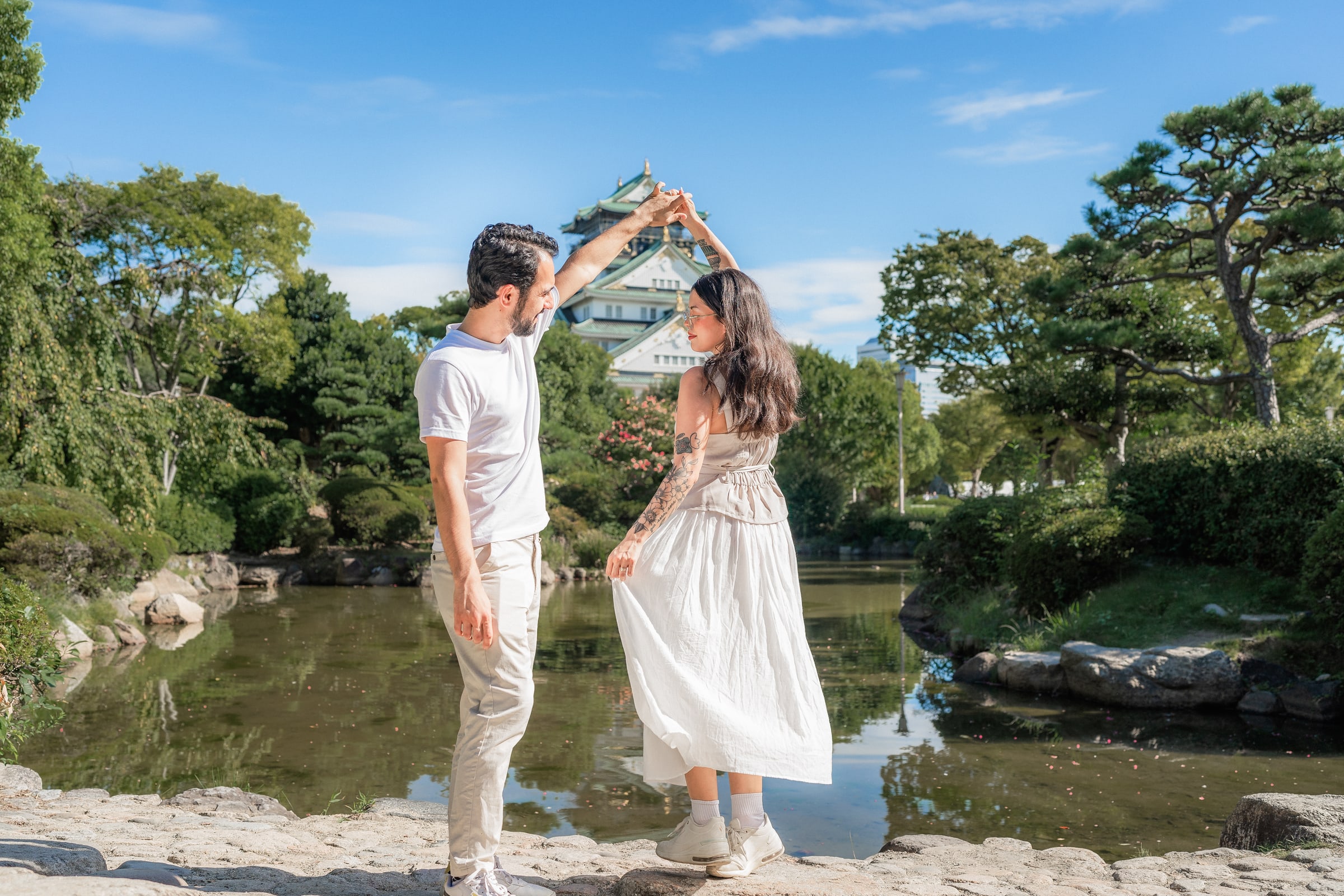
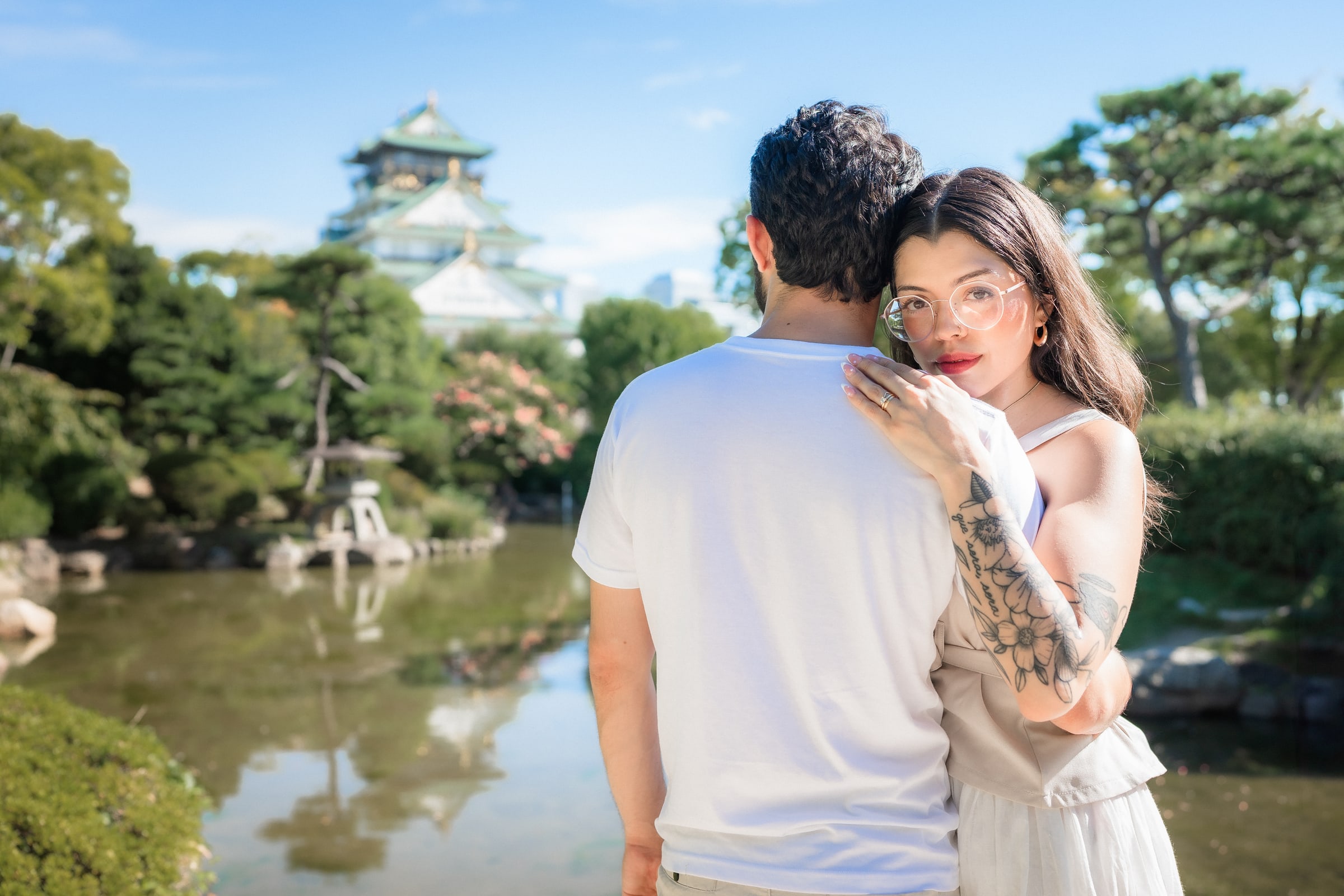
An Osaka elopement works well as a private, unhurried session rather than a full production. Coverage suits elopements, vow renewals, a day built around your ward-office registration, and pre- or post-wedding sessions, with one Osaka elopement photographer meeting just the two of you at a spot you choose, starting at €129 for a 15-minute session (30 and 60 minutes are also available). It is not all-day wedding coverage: think of it as the couple portrait half of your day, not the ceremony logistics, catering or reception.
For vows for two, we suggest Nakanoshima Park: free to enter and open around the clock, on a river island between the Dojima and Tosabori rivers with the old Central Public Hall close by, so you can choose the hour rather than work around opening times, ticket queues or the crowds on Ebisubashi Bridge.
Every session comes with a photographer, full editing on every delivered image, and a private online gallery. Nothing is printed and nothing is paid on the day; the only paperwork is the marriage registration itself, which you file separately at a ward office (see The Paperwork below).
Want pro photos in Osaka?
See Osaka photographers and prices →Local photographer's tip
“Read your vows to each other, not to me. Hold both hands, stand close enough that nobody else fits in the gap, and forget I'm there. At Nakanoshima, I'll be a few steps back on the path, and the only direction you'll get from me is 'take your time'.”
Where to Elope in Osaka
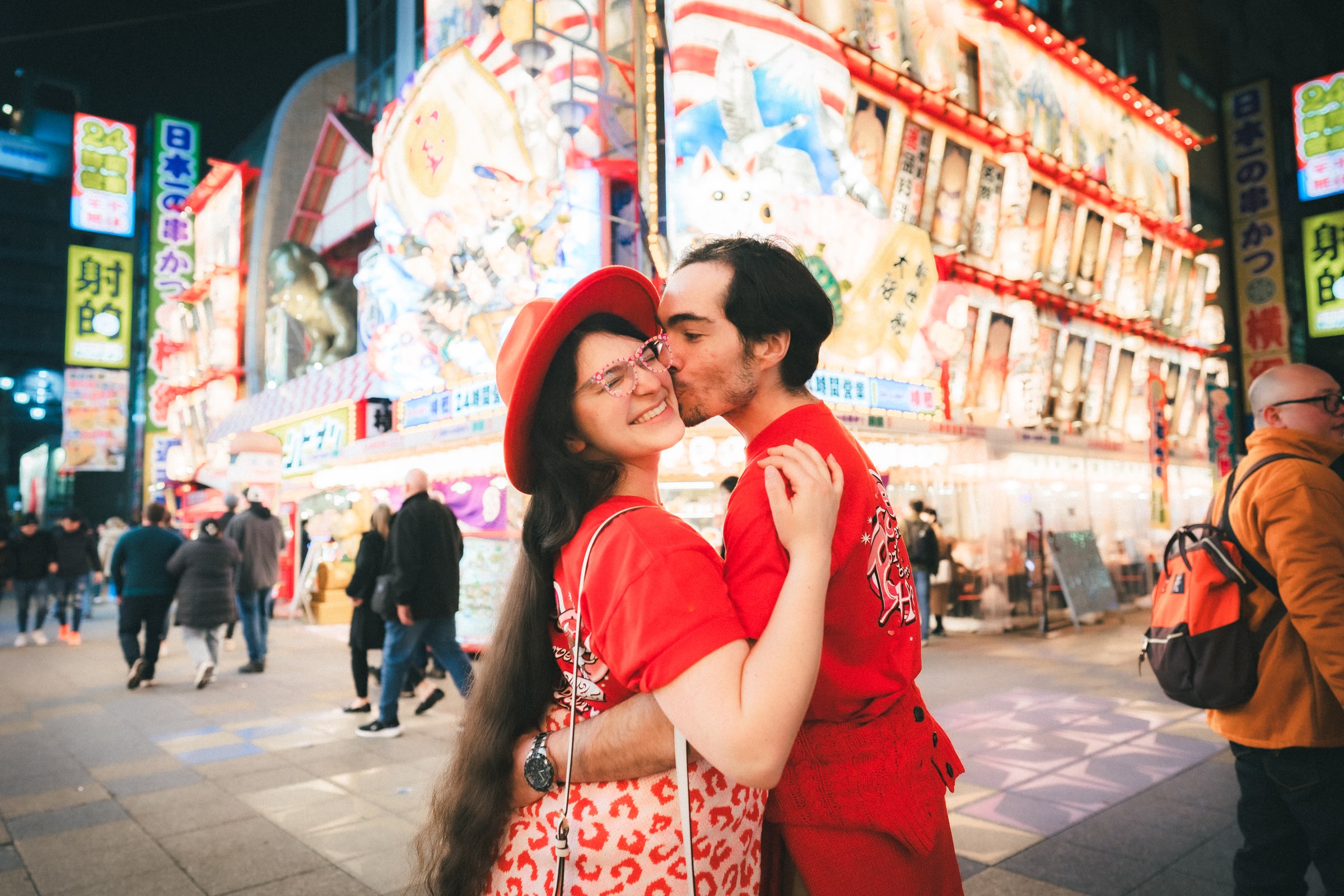
Osaka gives you two very different registers for a small ceremony: old-city calm at Shitennoji Temple and Osaka Castle's Nishinomaru Garden, and modern neon at Dotonbori and the city's towers. For the vows themselves, the quieter settings work best, since Ebisubashi Bridge at Dotonbori is busy most of the day; save the neon for portraits afterwards, once the Glico sign comes on at 6 PM.
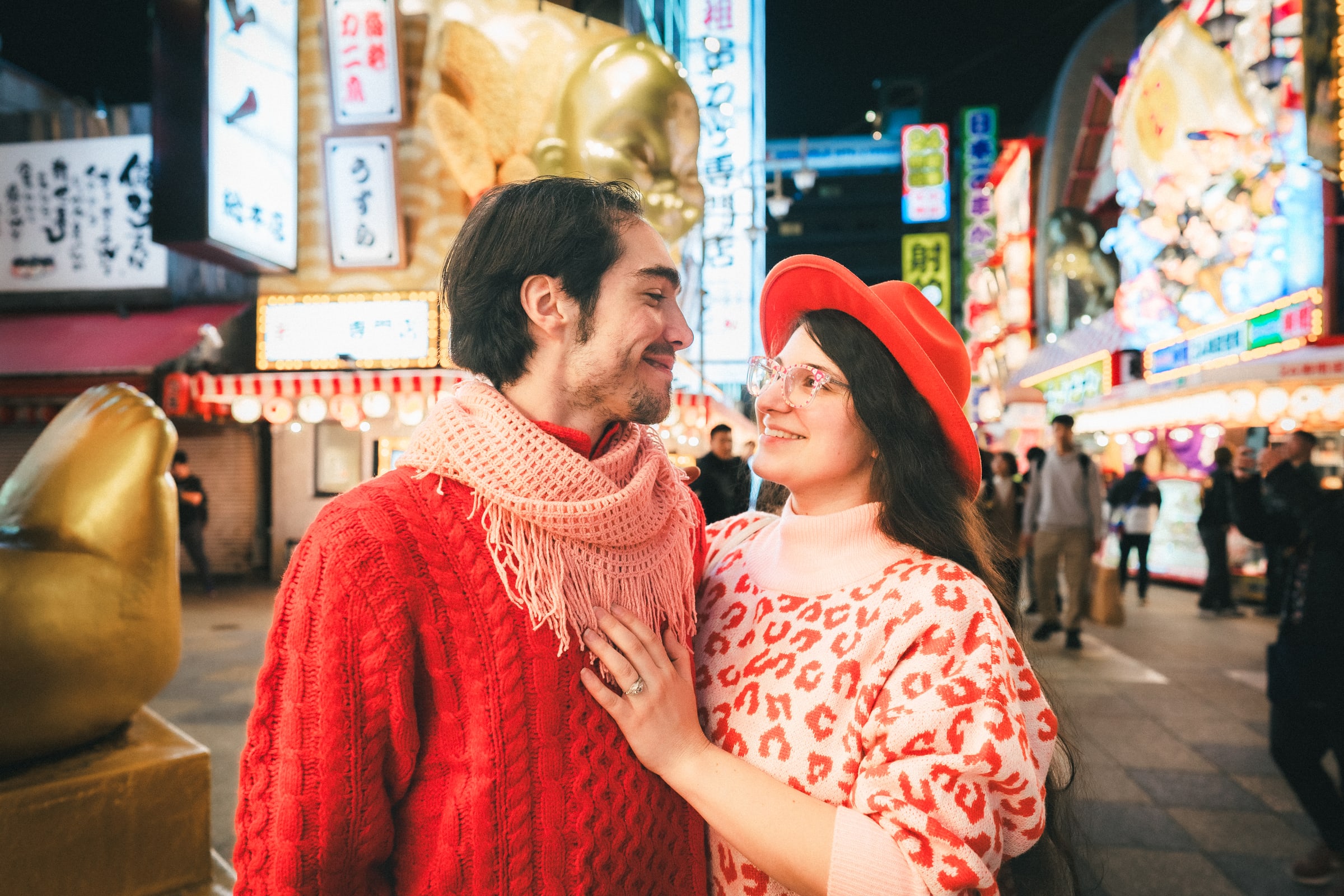
1 Dotonbori Canal & Glico Sign
Say your vows away from the crowds along the water, then walk the canal for portraits once the Glico sign lights up. The neon and reflections give the city backdrop couples picture for an Osaka elopement.
from €129crowds: high
Best time: Just after sunset, once the sign is lit, or early morning for a quieter canal
2 Nakanoshima Park
A riverside park with open lawns, the red-brick Central Public Hall and a rose garden, quiet enough on a weekday morning to read your vows without an audience.
crowds: low
Best time: Weekday morning, before the riverside paths fill
Tip: The park never closes and never charges admission, so an early start is easy to plan around.
Book any package and agree this spot with your photographer in the booking chat.
3 Shitennoji Temple
A calm, historic setting for a ceremony, with the five-story pagoda as a backdrop for portraits afterward. The outer grounds have an open, unhurried feel that suits quiet vows.
from €129crowds: low
Best time: Morning, before the inner precinct fills with visitors
Tip: Plan portraits for the garden and grounds around the pagoda; photography rules apply inside the pagoda and temple halls, so check on the day.
4 Tsutenkaku Tower
For couples who want their portraits with an old-Osaka streetscape underneath, the retro tower and surrounding lanes give texture that reads as pure Osaka rather than generic skyline.
from €129crowds: medium
Best time: Late afternoon, before the evening dinner rush fills the lanes
Tip: Work the surrounding lanes as much as the tower itself; the streetscape carries the shot.
5 Osaka Castle (Nishinomaru Garden view)
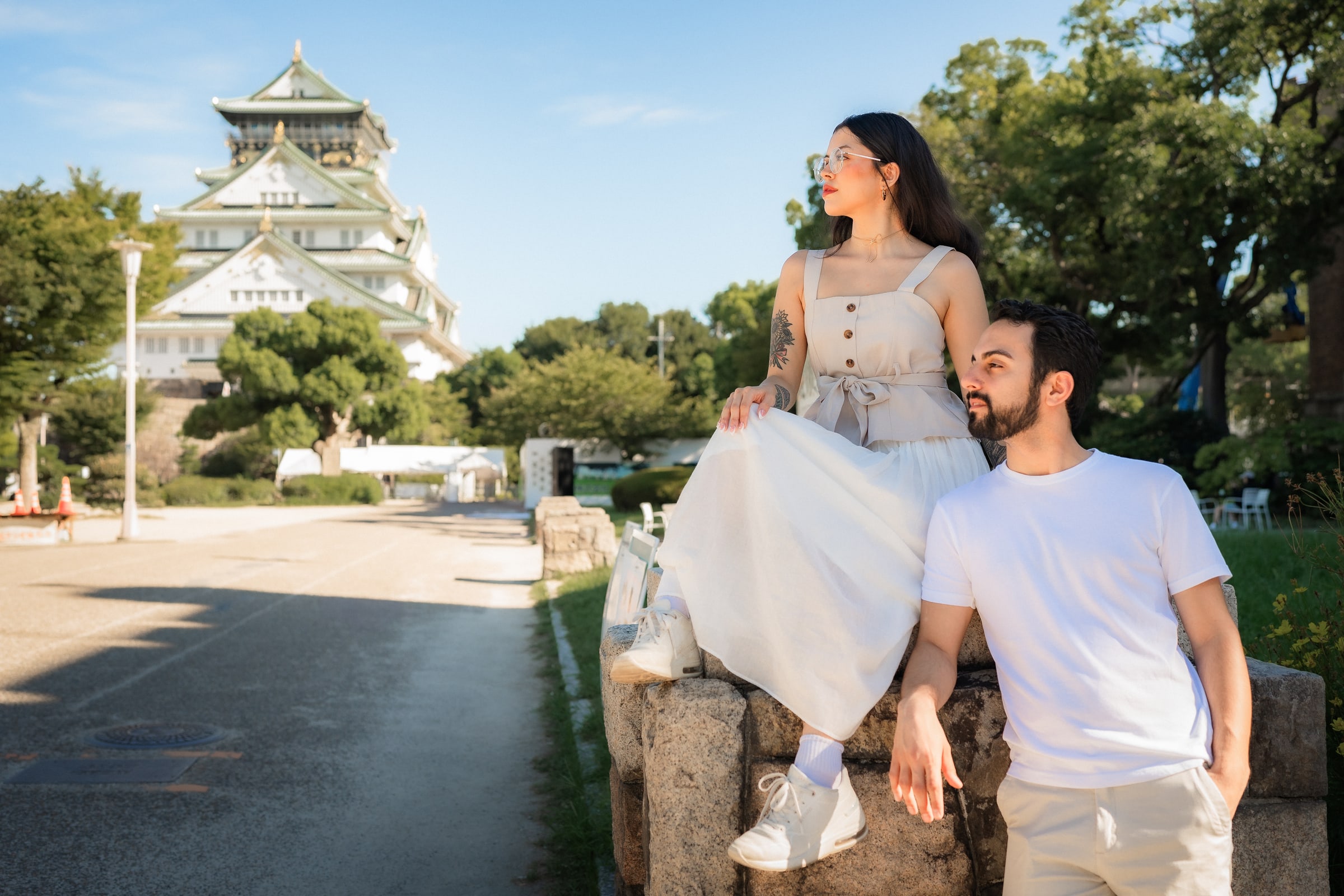
The garden across the moat frames the castle tower for classic post-ceremony portraits, with the stone walls and moat giving a formal, storybook feel.
from €129crowds: high
Best time: Morning light, on a regular-season visit
Tip: During cherry blossom season the garden keeps longer hours and charges more at the gate; check current hours and fees before you plan the ceremony around it.
6 Umeda Sky Building Floating Garden Observatory
An open-air rooftop over the city, worth building into the afternoon before the sunset rush arrives. The crowd thins earlier in the day.
crowds: medium
Best time: Afternoon, ahead of the sunset rush
Book any package and agree this spot with your photographer in the booking chat.
Golden-hour slots add €35; the full price is always shown before you pay.


Planning the Day
How to elope in Osaka comes down to sequencing the paperwork, the light and the walk between locations before you ever book a photographer. None of this needs a planner: a few decisions made in advance keep the day feeling like yours instead of a checklist.
- 1
Pick Your Ceremony Style First
Decide whether the day is a legal city-hall signing, a vow renewal, or a purely symbolic walk with no paperwork at all. This shapes everything after it: timing, outfits, even which spot goes first. The mistake couples make is booking the photographer before settling this, then trying to force the schedule around a session that was built for a different kind of day.
- 2
Choose Two or Three Spots, Not Five
Pair one water or canal view with one elevated or garden view so the light and backdrop change without the day turning into a march. Walking between more than three spots eats the hour in transit instead of photographs. Pick locations close enough that a slow walk between them still leaves room to stand still and actually look at each other.
- 3
Book the Photographer and Confirm the Meeting Point
Booking takes about 5 minutes online, and the exact meeting spot gets agreed afterward in a chat with your photographer, who can share live location on the day so finding each other isn't a scramble. The common error is leaving this until the morning of; settle it a day or two ahead so nobody is texting addresses while the light is already changing.
- 4
Plan Outfits and Any Changes in Advance
Bring only what you want in the photos: no printouts, no payment, nothing else is required on the day. If you want to switch looks between locations, say so when you book so the photographer can build it into the route and pacing. People often assume changes happen naturally mid-walk; without a heads-up, there simply isn't a planned pause for it.
- 5
Build In a Buffer Before Sunset or Your Ceremony Time
Arrive at your first spot with room to spare rather than racing the clock. Every session runs to the clock once it starts, so any delay getting there eats directly into it. Treat travel time as an estimate, not a guarantee, especially around Dotonbori or the castle grounds where paths get crowded.
- 6
Let the Photographer Direct, Don't Pose for the Camera
Expect simple prompts and movement rather than stiff formal poses; you don't need experience in front of a camera for this to work. The mistake is stiffening up and waiting to be told exactly where to put your hands. Walk, talk to each other, forget the lens is there for a stretch, and the shots that come from that stretch are usually the ones you keep.
- 7
Know What Happens After You Say I Do
Delivery lands in your private gallery within 48 hours, fully edited and yours in full resolution to print or share. If you want more than what's included, extra photos can be bought from the gallery afterward. The thing people forget: nothing further happens on your end until the gallery link arrives, so there's no follow-up call or invoice to plan around.
Dress, Suit and the Practical Bits
Osaka elopements move on foot, so dress for the walk before you dress for the photos. Between the canal at Dotonbori and the temple grounds at Shitennoji you're covering paved streets, open temple grounds and the steps down to the Tombori River Walk. Suits travel better in linen or a light wool blend than in anything stiff, and a slip dress or a two-piece that survives being sat on a step moves more easily than a full ballgown skirt or anything with a rigid structure. Bring a jacket you can carry over one arm rather than wear the whole time.
If the plan includes the rooftop at Umeda Sky, bring a layer regardless of season: the top deck is open-air and can be windy, so pin anything you care about keeping on your head. Anywhere else, fabric that moves, such as chiffon, light cotton or anything with a little drape, suits the moments when the photographer asks you to walk rather than pose.
Outfit changes are fine when you agree them with your photographer beforehand, and some couples planning an Osaka elopement build in one change between a formal look and something looser for a canal walk. Decide where that change happens before the day. Around Namba, the station closest to Dotonbori, private rooms can be rented by the hour through Japanese rental-space platforms, and some are listed specifically as changing or prep rooms. If you only need to store the second outfit, the Namba stations have coin lockers, though they fill quickly on busy days. A hotel room nearby is the simplest option of all.
Nothing else is required: no printouts, no payment on site, just the outfits and any props you want in frame. A small sewing kit and a bottle of water are worth the pocket space. The fixed price covers the photographer's time and full editing of every delivered photo, so the only real packing decision is what you can move in comfortably and still look like yourselves in.
The Paperwork
Photography and paperwork are two separate errands in Osaka. The registration is handled by the city, and the requirements depend on your nationality, so treat this as an overview rather than legal advice, and confirm the details with the ward office before you travel. What Smiler controls is the photography: a private photographer, your group only, for a set fee with no surprise charges on the day.
In Japan, a marriage is registered by filing a marriage notification (kon'in todoke) at a municipal office, and it takes legal effect on the day it is filed.In Osaka City the notification is filed at a ward office; confirm with the ward office where you plan to submit it which documents to bring before you travel. The form needs the signatures of two adult witnesses. Foreign nationals also need documents from their own country, typically a certificate of legal capacity to marry, and anything written in another language must come with a Japanese translation. Because the required documents differ by nationality, the city asks couples to consult the ward office's resident services counter in advance. Rules can change at the source too: since 1 September 2025, for example, US citizens can no longer have their sworn statement notarised at the US embassy or consulates in Japan and need a state notary instead. Ask your own embassy whether a marriage registered in Japan is recognised at home.
Osaka's ward offices are open on weekdays from 9:00 to 17:30, with some counters staying open until 19:00 on Fridays and a limited service on the fourth Sunday of each month. They are closed at weekends, on public holidays and from 29 December to 3 January. Once your notification is accepted, you can request a certificate of acceptance, which foreign nationals use as proof of the marriage.
What Getting Married in Osaka Actually Costs You
The photography side starts at €129 for a 15-minute session with 10 photos, covering the photographer's time, professional editing of every delivered image and a private online gallery. Venue entrance fees and transport aren't included, and any fee charged by the ward office, such as for a certificate of acceptance, sits outside this price entirely.
If you're planning an Osaka elopement around your registration or a small pre- or post-wedding session, the photography is booked separately from the ward office visit. Full-resolution photos land in your gallery within 48 hours, ready to print or share however you like, and free cancellation up to 24 hours before the shoot gives you room to move the shoot if your plans shift.
FAQ: Osaka Elopement
Can we actually elope in Osaka?
Yes. Coverage suits elopements, vow renewals, a day built around your ward-office registration and pre- or post-wedding sessions, not all-day wedding coverage. A photographer meets just the two of you, or your small group, at a spot such as Nakanoshima Park or the Dotonbori canal and works the vows and portraits as one private session. If you are also registering the marriage in Japan, that is a separate filing at a ward office: see The Paperwork above.
What do Osaka elopement packages include?
One photographer working with your group only, full editing of every delivered photo, and a private online gallery to download them from in full resolution. The shortest session starts at €129 for 15 minutes with 10 photos, covering the photographer's time and editing. Venue entrance fees and transport aren't included, so factor in something like Shitennoji's inner precinct fee if that's your backdrop. Payment is a single amount online at booking, with nothing more to settle on the day.
Is this the same as full wedding-day coverage?
No. This is built for elopements, vow renewals, registration days and pre- or post-wedding portraits, not a full day of bridal prep, ceremony and reception. Sessions run up to 60 minutes. The 15-minute session suits one location and one moment: the vows, the ring and a short portrait set around them, rather than a multi-venue wedding timeline. The 60-minute session (up to 12 people, 60 photos) leaves room for a second spot, but it is still not full-day coverage.
Where can we take portraits after the ceremony?
Nakanoshima Park works well for portraits after the vows: it's free to enter and open around the clock, the old Central Public Hall stands close by as a backdrop, and around 3,700 rose bushes fill the rose garden, peaking in mid-May and mid-October. For an evening set, Dotonbori is the neon option once the Glico sign comes on at 6 PM, and the Tombori River Walk below Ebisubashi Bridge is quieter than the bridge itself.
What is the best time of day for ceremony photos?
It depends on the spot. At Dotonbori, our photographers report that the canal is quietest around 6 AM, before the daytime foot traffic builds, while the Glico sign itself is only lit from 6 PM until midnight, so you choose between calm water and neon. At the Umeda Sky Building, dusk is the busiest time on the rooftop, so an earlier slot is calmer. Nakanoshima Park is always open, so there you can pick the hour freely.
What are the legal requirements to marry in Osaka?
That side sits with the ward office handling your registration, not with the photographer. In Osaka City, the marriage notification needs two adult witnesses, and foreign nationals need documents from their own country with Japanese translations. These vary by nationality, so consult the ward office before fixing your date. What Smiler covers is the photography itself: one photographer, your group only, a private gallery and full editing, built around whatever registration moment you've arranged.
Can our few guests be in the photos too?
Yes. Every shoot is private, with one photographer working with your group only, so guests you bring along are part of that group. The 15-minute session is for up to 2 people, the 30-minute session for up to 6 and the 60-minute session for up to 12, so book the length that fits your guests, then agree the plan for the day with the photographer in the booking chat so they know who belongs in the frame. Keep in mind that at busy spots such as Dotonbori, the general public will still be around: the privacy covers your session, not the location itself.
Do we need witnesses?
For the legal registration, yes: in Osaka City, the marriage notification must be signed by two adult witnesses. Whether visitors without residence in Japan can sign as witnesses is worth confirming with the ward office in advance, since the city already asks foreign nationals to consult it before filing. For the photos themselves, no witnesses are needed: the session can be just the two of you and your photographer.
Want pro photos in Osaka?
Book an Osaka photoshoot from €129 →More Osaka guides
Families
Family Photoshoot in Osaka: Spots, Timing and What It Costs
Couples
Couples Photoshoot in Osaka: Romantic Spots, Posing and Prices
Proposals
Planning a Proposal in Osaka? A Local Photographer’s Guide
Planning
Your Complete Osaka Photoshoot Guide (2026)
Prices
How Much Does an Osaka Photographer Cost? (2026)
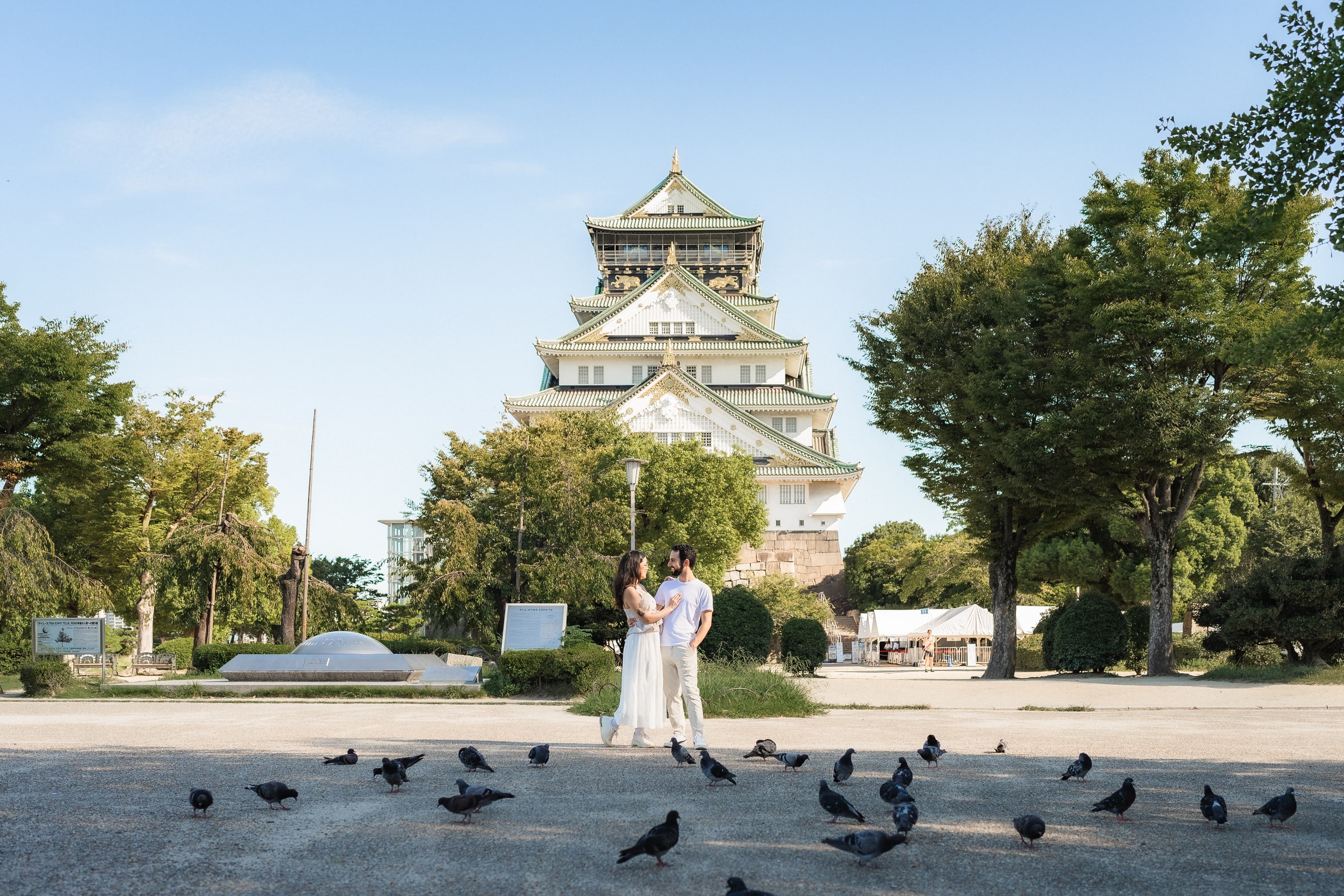
Photo spots
Best Photo Spots in Osaka, Ranked by Real Photoshoots (2026)
Photos in 48 h
From €129