
Best Photo Spots in Osaka, Ranked by Real Photoshoots (2026)
Verified by Agus Widodo, Smiler photographer in Osaka
Osaka photo spots start at Dotonbori Canal, where the Glico Running Man sign, a fixture here since 1935, throws its neon across the water: the canal for foreground, the sign for colour, and the bridge crowd blurred into motion behind you. The sign is lit from 6 PM until midnight, so a shoot timed around dusk catches the neon at full strength before the evening crush peaks on Ebisubashi Bridge. For a calmer angle, drop one level down to the Tombori River Walk, the canalside promenade below the bridge: it is less crowded, gets you closer to the sign, and from the opposite bank frames the sign with the bridge in front of it. Our photographers report that the quietest window is around 6 AM, before the daytime foot traffic builds; after midnight the canal empties out too, but by then the sign has switched off.
Beyond the canal, Osaka photo spots range from temple grounds to open-air observation decks. Shitennoji Temple offers a calmer register: wide courtyards, a five-storey pagoda against the sky, and none of the neon-district noise (photography rules apply inside the pagoda and temple halls, so check them on the day; the shot here is the building from the grounds). Tsutenkaku Tower gives you the retro-futurist skyline angle, with the tower itself doubling as a graphic backdrop from the streets below.
Every shoot booked through Smiler runs the same way regardless of location: a private local photographer, just your group, with the full price paid online before the day and no haggling. Sessions start at €129 for 15 minutes and 10 professionally edited photos, with 30- and 60-minute options, and photos arrive in a private gallery within 48 hours. Golden-hour slots add €35. You bring the outfit and pick the spot; at Dotonbori, that can mean starting on the River Walk rather than the bridge.
Want pro photos in Osaka?
See Osaka photographers and prices →Local photographer's tip · Dotonbori
“My favourite Dotonbori is around six in the morning. The shutters are still down, the canal's nearly empty, and on a calm day the water's still enough to hold the whole street upside down. It feels like the city's letting you in on a secret before it wakes up.”
The Spots
These six Osaka photo spots were chosen by local photographers rather than ranked as the most instagrammable places in Osaka, so their order is not a verdict on which is best. Anyone looking for the best photo spots in Osaka will find these six a working shortlist, and they are photo locations Osaka photographers return to. They cover very different settings: the neon of Dotonbori Canal, the pagoda and courtyards of Shitennoji, the moat view at Osaka Castle's Nishinomaru Garden and the rose garden on Nakanoshima, the river island between the Dojima and Tosabori rivers. One of our photographers suggests starting on Nakanoshima in the morning and drifting down to Dotonbori for when the Glico sign comes on at six.. With only 15 to 30 minutes, start at Dotonbori: the canalside Tombori River Walk gives you a quieter angle than Ebisubashi Bridge, and from 6 PM the Glico sign adds the colour.
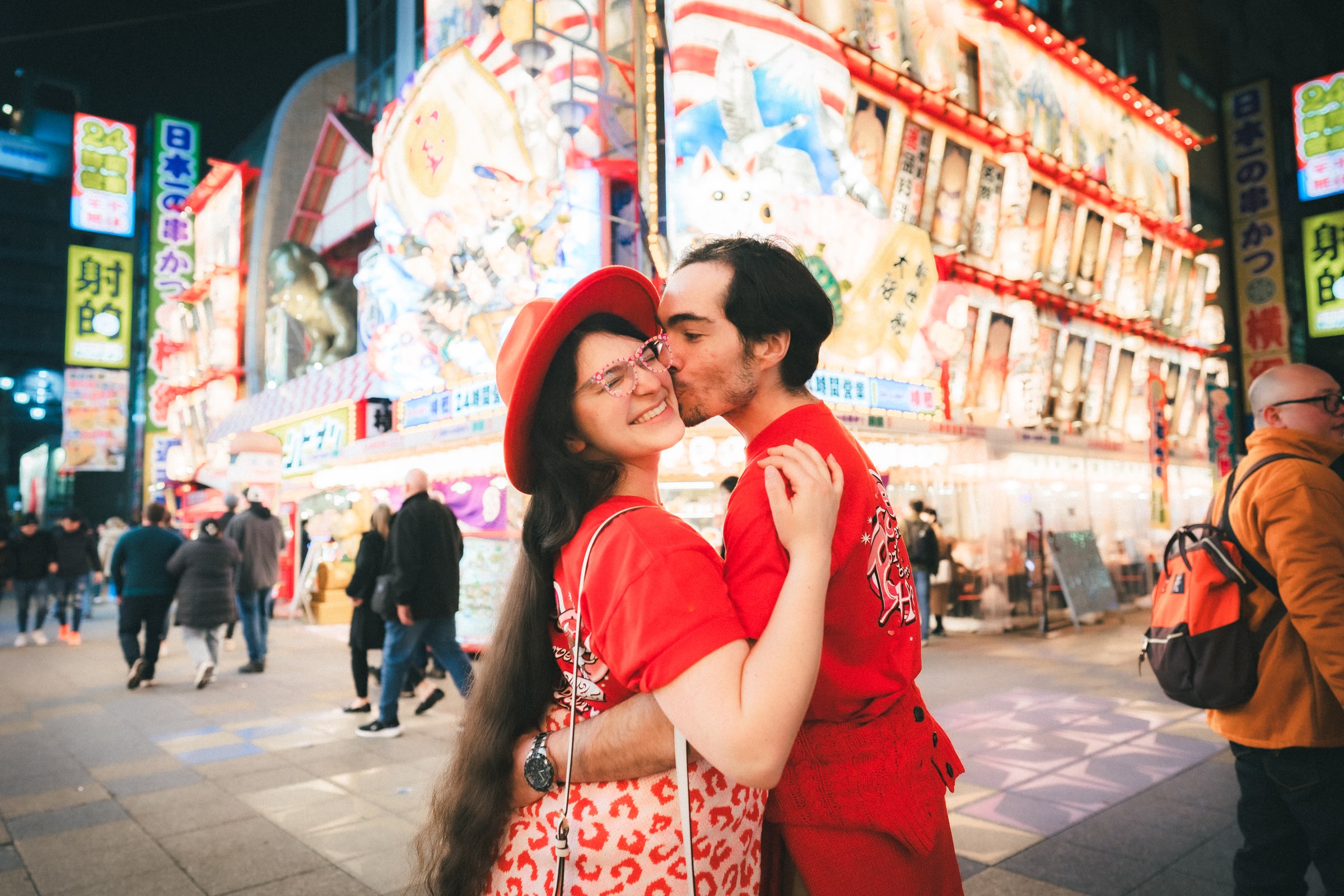
1 Dotonbori Canal & Glico Sign
The neon heart of Osaka: canal reflections, the running-man sign, and the Ebisubashi Bridge crowd. It works any hour, day or night, and needs no walk from the nearest train exit.
from €129crowds: high
Best time: Just after sunset, once the neon switches on and before the bridge fills up.
Tip: The sign stays lit until close to midnight, and the canal empties out noticeably after that for calmer reflections.
2 Shitennoji Temple
A working Buddhist temple with a five-story pagoda and quiet inner courtyards, a slower counterpoint to Dotonbori's neon.
from €129crowds: low
Best time: Mid-morning on a weekday, before tour groups arrive at the Central Complex.
Tip: Plan shots for the courtyards and gardens around the pagoda; photography rules apply inside the pagoda and temple halls, so check on the day.
3 Tsutenkaku Tower
The retro tower over the Shinsekai district, all old-school signage and narrow lantern-lit streets.
from €129crowds: medium
Best time: Early evening, when the tower lights come on but the streets are still walkable.
Tip: The open-air Tenbo Paradise deck near the top catches wind and better light than the enclosed floor below.
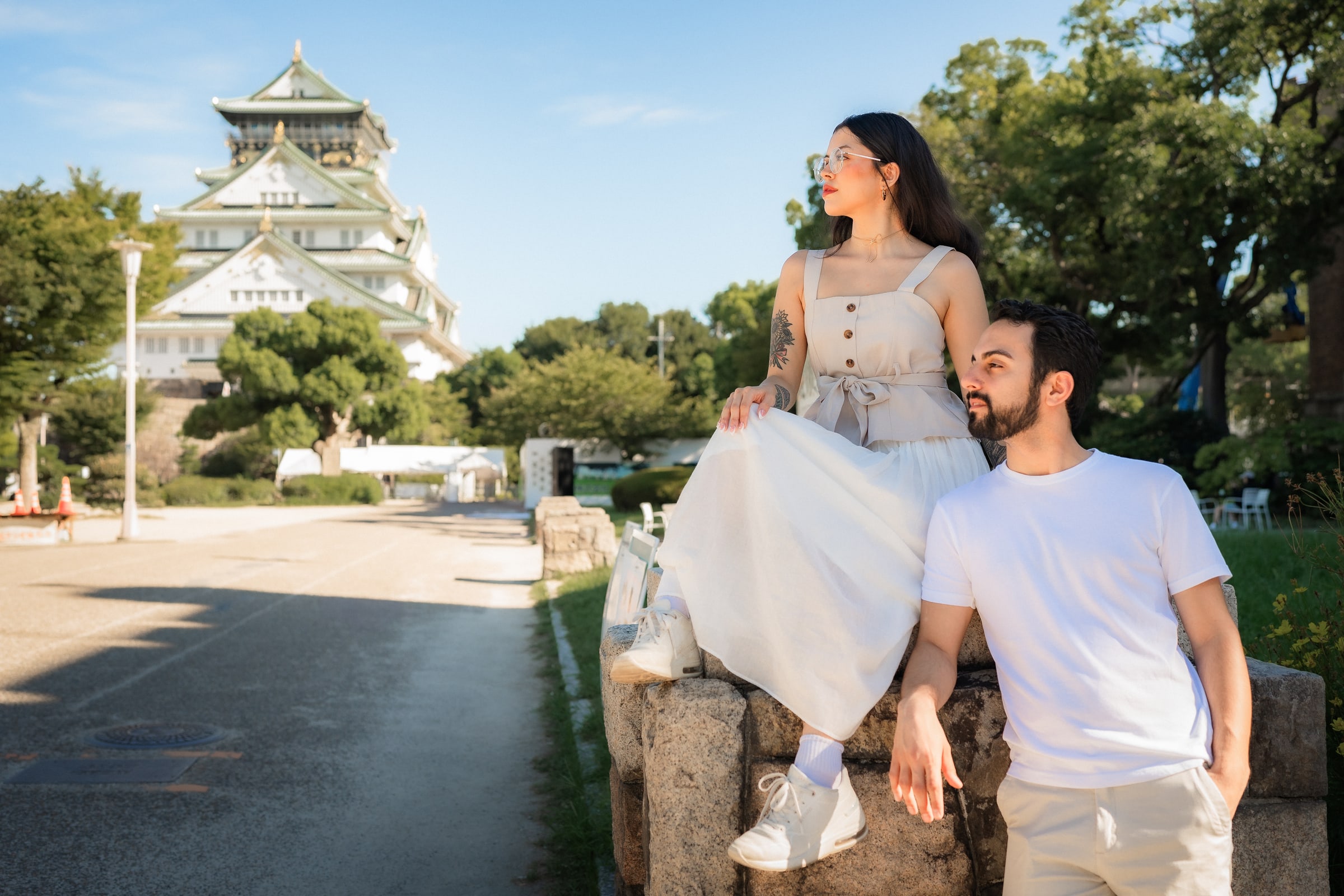
4 Osaka Castle (Nishinomaru Garden view)
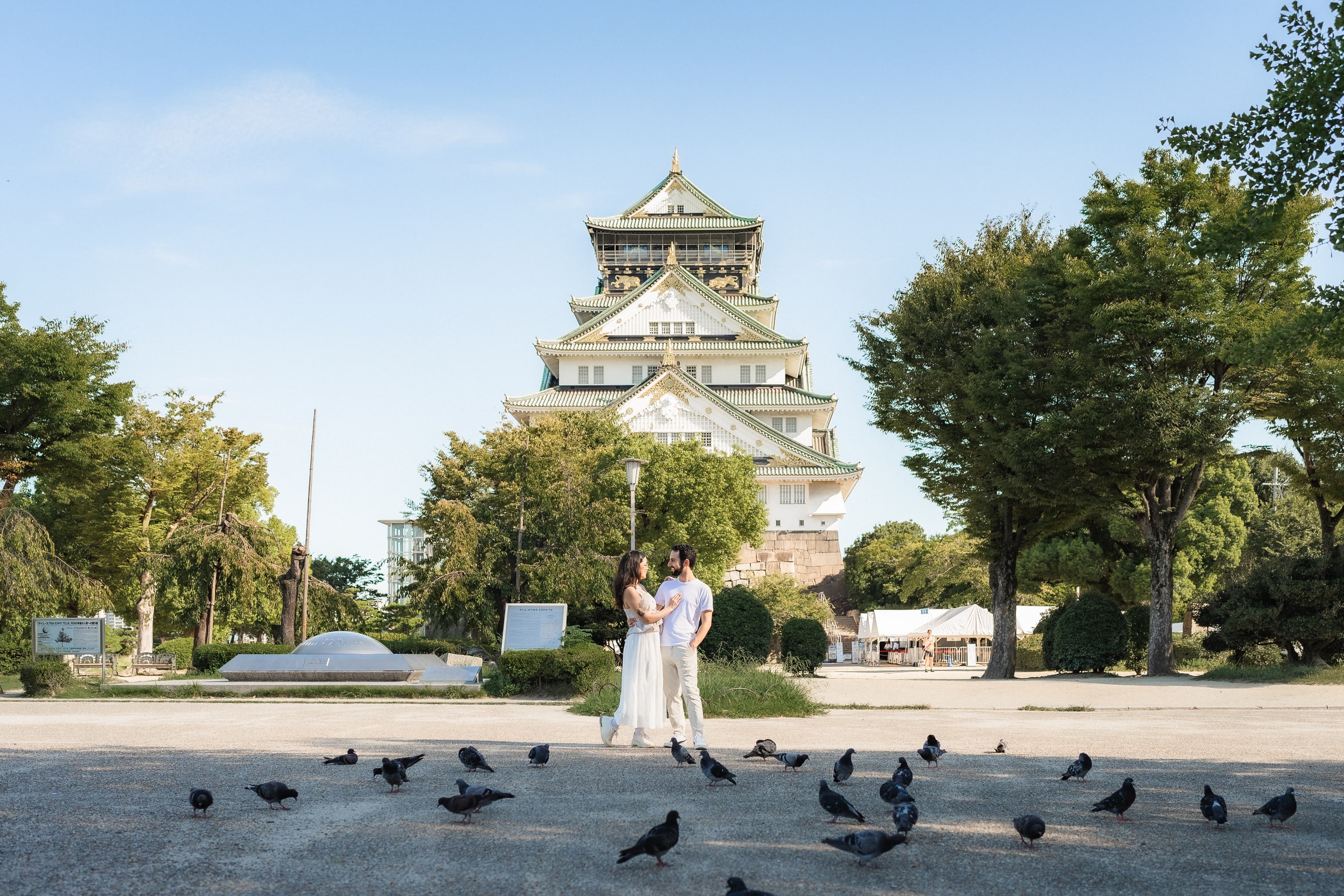
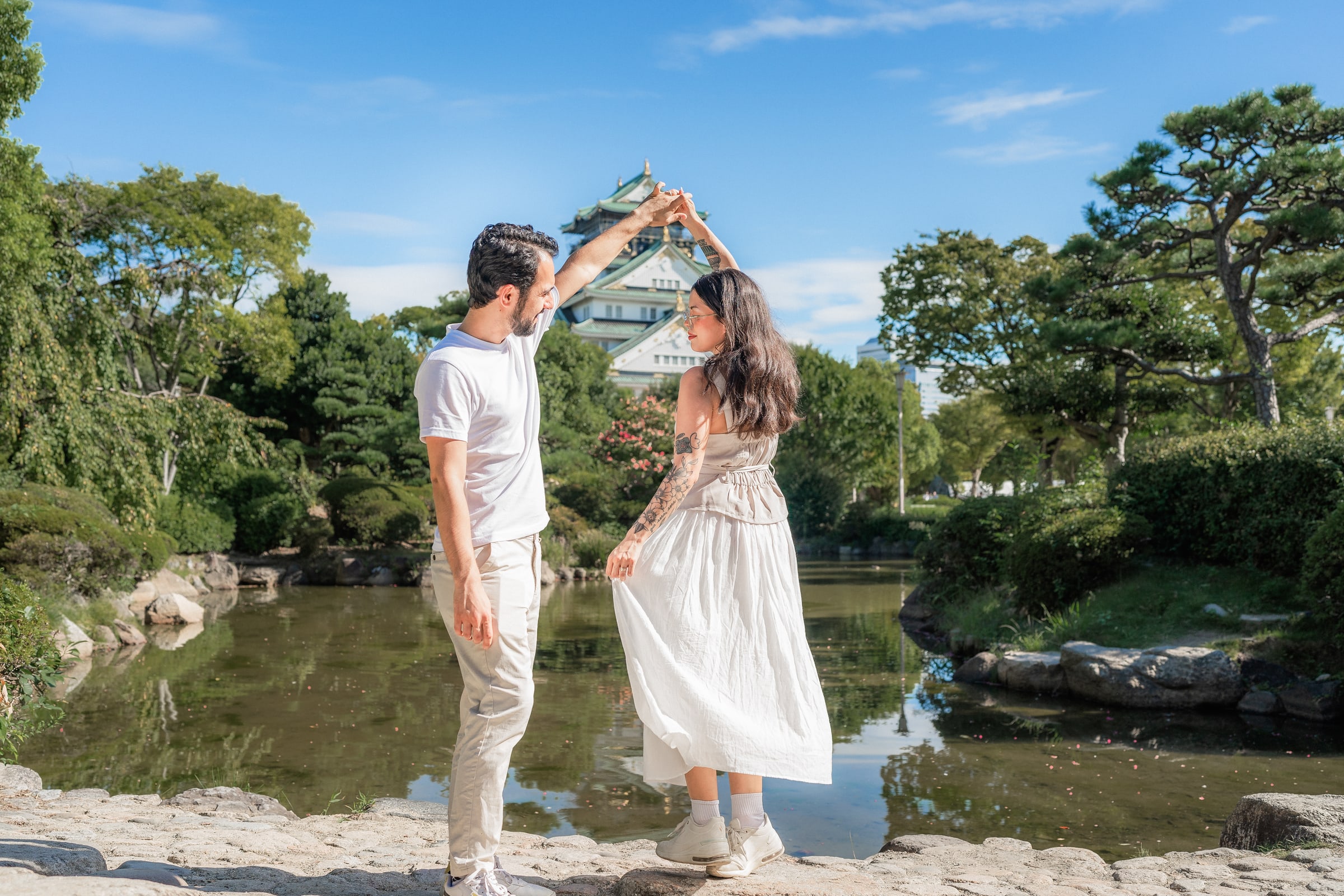
The classic shot: the castle tower rising over the moat from inside Nishinomaru Garden, framed by pine trees and, in season, cherry blossoms.
from €129crowds: high
Best time: Morning, soon after the garden opens, before the paths fill in.
Tip: The garden closes earlier than the castle grounds, so check timing if you want the tower-over-moat angle without a rush.
5 Umeda Sky Building Floating Garden Observatory
A rooftop, open-air ring connecting two towers, with a full skyline sweep over the city.
crowds: medium
Best time: Half an hour before sunset, to catch the skyline in daylight and lit up.
Tip: The rooftop deck is open-air and can be windy, so bring a layer even on a warm day.
Book any package and agree this spot with your photographer in the booking chat.
6 Nakanoshima Park
A riverside park between two channels, best known for its rose garden of roughly 310 varieties in full bloom twice a year.
crowds: low
Best time: Weekday mornings during the mid-to-late May or October bloom.
Tip: The park never closes and never charges admission, so an early loop before the crowds is easy to plan around.
Book any package and agree this spot with your photographer in the booking chat.
Golden-hour slots add €35; the full price is always shown before you pay.


When to Shoot in Osaka
The table below sets each season against three Osaka spots whose best window depends on what is blooming or lit. In spring, the draw is Osaka Castle's Nishinomaru Garden: its hundreds of cherry trees bloom together, and during the blossom period the garden stays open into the evening for illuminated night viewing, which draws the largest crowds. At Dotonbori, the Glico sign is lit from 6 PM until midnight all year. Our photographers report that the canal is quietest around 6 AM, before the daytime foot traffic builds, though the neon is off by then. Nakanoshima Park's rose garden, with about 3,700 rose bushes, peaks twice, in mid-May and mid-October, so those are the two windows to plan a flower shot around.
Rain does not have to wreck a plan: shoots can be rescheduled free up to 24 hours out, so a grey forecast in any season means moving the booking, not losing it. If you are chasing a particular bloom or a quiet canal reflection, plan around the light note for that season in the table rather than the month alone.
| Season | Sunrise | Sunset | What it means for your shoot |
|---|---|---|---|
| Winter | 06:29–07:05 | 16:46–17:52 | The Umeda Sky Building's open-air deck stays open and outdoor spots see lighter foot traffic than the bloom seasons, though the deck can be windy so bring a layer. |
| Spring | 04:46–06:27 | 17:52–19:04 | Cherry blossom season at Osaka Castle and the first Nakanoshima rose bloom draw the heaviest crowds of the year, so weekday mornings beat weekends by a wide margin. |
| Summer | 04:44–05:30 | 18:26–19:15 | Dotonbori's Glico Sign stays lit into the evening, and the bridge crowd thins once the sign's late hours arrive, making a late session calmer than a daytime one. |
| Autumn | 05:30–06:45 | 16:47–18:25 | Nakanoshima Park's second rose bloom draws large weekend crowds again, so a weekday visit is worth planning around for a clear shot of the garden. |
FAQ: Osaka Photo Spots
Which of the Instagram spots in Osaka should I pick if I only have 30 minutes?
With 30 minutes, go straight to Dotonbori Canal for the Glico sign. One spot worked well beats two rushed ones, and the canal gives you water in the foreground and the sign for colour without needing a second location. For a calmer angle than Ebisubashi Bridge, start on the Tombori River Walk, the canalside promenade one level below it. Our photographers report that the canal is quietest around 6 AM, but if you want the neon, the sign is lit from 6 PM until midnight, so pick an evening slot instead.
Can I choose my own spot or route for the shoot?
Yes. The route and starting point are agreed with your photographer in the booking chat before the shoot, so you are not locked into a fixed itinerary. You are matched with a vetted local photographer when you book, and the chat lets you ask them about a particular corner of the city before the day. If you are still deciding where to take photos in Osaka, the best photo spots in Osaka are covered above; if you have a spot in mind that isn't on the list, name it in the chat and check whether it charges an entrance fee before the day.
How do photographers deal with crowds at the famous spots?
By timing the visit rather than fighting the crowd. Ebisubashi Bridge at Dotonbori is nearly always busy, so the calmer options are the Tombori River Walk below it or an early start around 6 AM, when our photographers report the canal is at its quietest. At Nishinomaru Garden, the evening illuminations during cherry blossom season draw large crowds, so a daytime slot keeps you clear of them. Every shoot is private, with one photographer and your group only, so the only people to work around are the general public.
Are sunrise shoots worth getting up for in Osaka?
Yes at Dotonbori, but not inside Osaka Castle's Nishinomaru Garden. Our photographers report that Dotonbori is quietest around 6 AM, before the daytime foot traffic builds. The Glico sign is only lit from 6 PM to midnight, though, so a dawn shot trades the neon for an empty canal. Nishinomaru Garden doesn't open until 9:00, so sunrise there isn't possible, although the surrounding castle park is open at all hours. Nakanoshima Park is always open, so an early start there buys you quiet riverside paths. Sunrise slots add €35 to the booking, so check the total before you pay.
Which spot is best if the weather turns grey?
Shitennoji Temple holds up best under flat light. Most of its outer grounds are free to walk, and the pagoda and temple halls give you strong shapes that don't depend on sunshine for contrast. The Umeda Sky Building's Floating Garden Observatory is the riskier choice: its top deck is open-air and exposed to the wind, and low cloud flattens the city view below. Save it for a clearer forecast, and check it is open on the day, since it closes on some special event days.
Do the photographers know these spots personally?
Yes: the photographers are Osaka locals, and the timing tips in this article come from their reports. That includes the 6 AM quiet at Dotonbori and the thinner crowds there after midnight. The site rules come from official sources: at Shitennoji, for example, photography rules apply inside the pagoda and temple halls, so check them on the day. Anything specific you want to know about a spot, such as where to start or how to get there, is best raised in the booking chat before your shoot.
How much walking should I expect between spots?
Expect more walking than the word "spot" suggests at the larger locations. Nakanoshima Park runs about 1.5 km along its river island, and Nishinomaru Garden covers around 64,000 m², so moving between angles within one location can take a few minutes. The Dotonbori canal walkway is shorter and easier to cover. How many spots fit into your session is best agreed with your photographer in the booking chat. If you want a second spot, they can suggest one nearby.
Do I need a permit for a professional photoshoot in Osaka?
Nothing in the booking asks you to arrange a permit, but rules can differ by site, so check with a location directly if you are unsure. The Dotonbori canal walkways and Nakanoshima Park are public and free to enter, and so is most of Shitennoji's outer grounds. Paid areas, such as Shitennoji's inner precinct with the pagoda, the Osaka Castle tower and Nishinomaru Garden, charge their own entrance fees. These are not included in the shoot price and are paid on-site like any visitor ticket.
Want pro photos in Osaka?
Book an Osaka photoshoot from €129 →More Osaka guides
Families
Family Photoshoot in Osaka: Spots, Timing and What It Costs
Elopements
Osaka Elopement Photographer: Small Weddings, Real Prices
Couples
Couples Photoshoot in Osaka: Romantic Spots, Posing and Prices
Proposals
Planning a Proposal in Osaka? A Local Photographer’s Guide
Planning
Your Complete Osaka Photoshoot Guide (2026)
Prices
How Much Does an Osaka Photographer Cost? (2026)
Photos in 48 h
From €129